Portables (Apple)

GPUs Dropping Dead In 2011 MacBook Pro Models 359

New submitter blackwizard writes "MacRumors is reporting on pervasive GPU failures in 2011 MacBook Pro machines, leading both to intermittent video issues, corruption, crashing/freezing, and eventually even failure to boot. Luckily for Apple, the machines are now out of warranty (unless you bought AppleCare). The issues have been reported both on Apple's own forums and other blogs. Apple has so far failed to take action on the problem. Will they take ownership of the issue, or continue to ask customers to pay for an entire new logic board when just the GPU fails?"
Input Devices

Stop Trying To 'Innovate' Keyboards, You're Just Making Them Worse 459

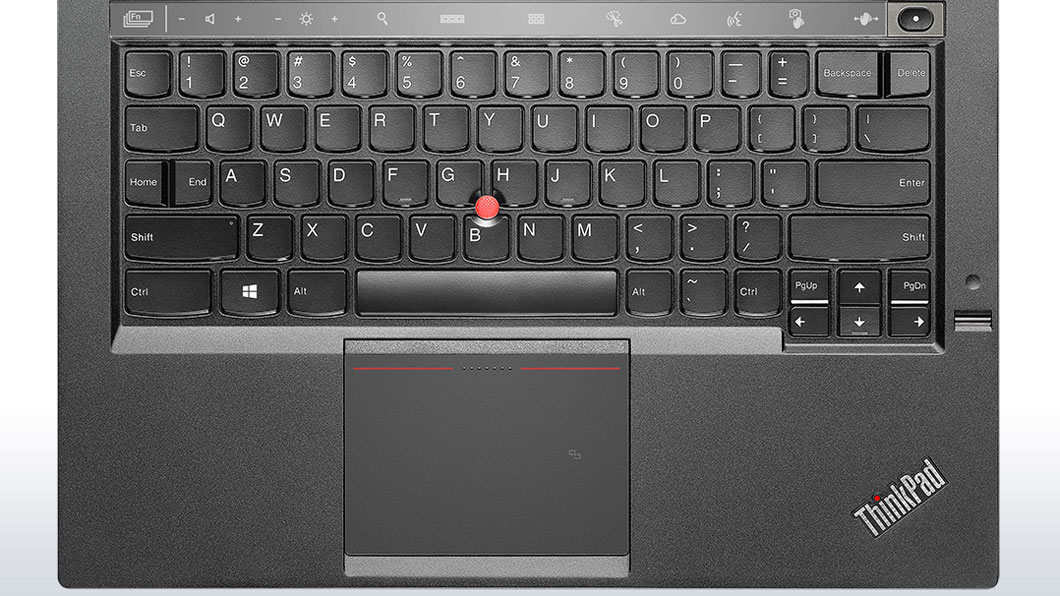
FuzzNugget writes "Peter Bright brings the hammer down on the increasing absurdities of laptop keyboard design, from the frustrating to the downright asinine, like the 'adaptive keyboard' of the new Lenovo X1 Carbon. He says, 'The X1's Adaptive Keyboard may have a superior layout to a regular keyboard (I don't think that it does, but for the sake of argument, let's pretend that it does), but that doesn't matter. As long as I have to use regular keyboard layouts too, the Adaptive Keyboard will be at a huge disadvantage. Every time I use another computer, I'll have to switch to the conventional layout. The standard layout has tremendous momentum behind it, and unless purveyors of new designs are able to engineer widespread industry support—as Microsoft did with the Windows keys, for example—then their innovations are doomed to being annoyances rather than improvements.' When will laptop manufacturers focus on perfecting a standardized design rather than trying to reinvent the wheel with every new generation?"
Google

Building an Open Source Nest 195

An anonymous reader writes "Google's recent acquisition of Nest, the maker of smart thermostats and smoke detectors, has sparked concerns of future plans for the devices, and how Google's omnipresent thirst for information will affect them. Thus, a team of engineers at Spark sat down and roughed out a prototype for an open source version of Nest. It looks surprisingly good for such a short development cycle, and they've posted their code on Github. The article has a number of short videos illustrating the technology they used, and how they used it. Quoting: 'All in, we spent about $70 on components to put this together (including $39 for the Spark Core); the wood and acrylic were free. We started working at 10am and finished at 3am, with 3.5 engineers involved (one went to bed early), and the only work we did in advance was order the electronic components. We're not saying that you can build a $3.2 billion company in a day. But we are saying that you can build a $3.2 billion company, and it's easier now than it's ever been before.'"
Hardware

Video CES 2014: HAL© is a Voice- and Gesture-Operated Remote (Video) 46

According to the company's website, "HAL© is the future of television and media management. Using proprietary gesture and voice control technology..." In this case, HAL© stands for “Human Algorithm LTE.” It looks like it's a lot safer than the original HAL 9000, anyway. Is it ready for prime time? If their CES demo is any indication, not quite. They say HAL© is going to ship in the fall of 2014. The technology? They won't say beyond, "It's proprietary." Ah! Then it must be good, right? Another voice-operated remote control -- that's already available for purchase from major retailers -- is the Ivee Sleek. There are other HALs out there, too. Like this one. And this one, which is a home automation server that costs $2499.00 (& up). Anyway, the retail price for HAL(circle-C) is supposed to be $199 when it hits the streets. And even though it doesn't look like HAL© can do much that I can't already do with my Android phone, Skyvi, and a Chromecast, it might be fun to test and review once it's in production.
Graphics

Adobe Adds 3D Printer Support To Photoshop 73

angry tapir writes "Adobe has rolled out an update to Photoshop that incorporates direct support for 3D printing. According to Adobe, they don't expect most users to directly create 3D meshes in Photoshop. Instead they expect most of the time people will import objects from other applications and then use Photoshop as a finishing tool to tweak and repair meshes — in a similar fashion to how Photoshop can be used to tweak photos before production. The application currently directly supports MakerBot printers and the online Shapeways service. More printer support is coming (printer profiles are editable XML files) and the application can also export STL files that can be copied to a USB drive and used on other brands of 3D printer."
Cloud

Robots Test Their Own World Wide Web 64

An anonymous reader writes "A new system called RoboEarth is currently being tested at Eindhoven University which will enable robots to complete tasks by sharing knowledge through a cloud based world-wide-web. The current study is based in a hospital setting where robots are sharing information to complete tasks like moving around by sharing a map of the room and serving drinks to 'patients'. The aim of the system is that robots and humans will be able to upload information to a cloud based database which can be accessed and used by robots. This will enable robots to share information and also to learn from each other. It will also allow robots to react to changes within their environment without having to be reprogrammed."
Technology

Carbon Nanotubes and Spongy Polymer Help Transistors Stretch 17

MTorrice writes "To make future displays that roll, bend, and stretch, electronics makers need the circuits that control the pixels to be elastic. In particular, they need flexible transistors. Now researchers have combined a carbon nanotube mesh with a spongy ionic polymer to build super-stretchy transistors. The scientists can pull the devices to lengths 57% greater than their resting length without disrupting performance."
Power

Khosla, Romm Fire Back At '60 Minutes' Cleantech Exposé 117

An anonymous reader writes "CBS recently aired a segment on its 60 Minutes TV newsmagazine critical of what it referred to as the 'Cleantech' industry, i.e. clean energy startups, often founded by Silicon Valley/IT businessmen and engineers. Correspondent Lesley Stahl adapted the familiar confrontational 60 Minutes style when interviewing venture capitalist Vinod Khosla, an investor in biofuel startup KiOR and dozens of other clean energy businesses, then following up with other industry experts who appear to refute Khosla's assertions. Stahl ran down a list of high profile taxpayer-subsidized industry failures and suggests that private investors such as Khosla seem to be losing money as well. Khosla has just responded in the form of an open letter to CBS News which lists allegedly false and inaccurate statements in the 60 Minutes program, while pointing out that the fossil fuels industry is also heavily subsidized by government. Khosla, a longtime general partner at Kleiner Perkins before starting his own firm, was one of four Stanford graduate students who co-founded Sun Microsystems in the early 1980s. Physicist and climate blogger Joseph Romm posted a response to what he referred to as the '60 Minutes hit job on clean energy' last week; other environmentalists have also weighed in."
AMD

AMD's Kaveri APU Debuts With GCN-based Radeon Graphics 123

crookedvulture writes "AMD's next-generation Kaveri APU is now available, and the first reviews have hit the web. The chip combines updated Steamroller CPU cores with integrated graphics based on the latest Radeon graphics cards. It's also infused with a dedicated TrueAudio DSP, a faster memory interface, and several features that fall under AMD's Heterogeneous System Architecture for mixed-mode computing. As expected, the APU's graphics performance is excellent; even the entry level, $119 A8-6700 is capable of playing Battlefield 4 at 1080p with medium detail settings. But the powerful GPU doesn't always translate to superior performance in OpenCL-accelerated applications, where comparable Intel chips are very competitive. Intel still has an advantage in power efficiency and raw CPU performance, too. Kaveri's CPU cores are certainly an improvement over the previous generation of Richland chips, but they can't match the per-thread throughput of Intel's rival Haswell CPU. In the end, Kaveri's appeal largely rests on whether the integrated graphics are fast enough for your needs. Serious gamers are better off with discrete GPUs, but more casual players can benefit from the extra Radeon horsepower. Eventually, HSA-enabled applications may benefit, as well."
Displays

I Became a Robot With Google Glass 134

Nerval's Lobster writes "Videographer and journalist Boonsri Dickinson took the second generation of Google Glass out for a spin, and came back with some thoughts (and a video) on the hardware (basically unchanged from the first generation) and the new XE12 software upgrade (which includes many new features, such as the 'eye wink' option for snapping photos). New apps in the tiny-but-growing Glass app store include Compass, which allows you to find interesting landmarks; Field Trip, which allows you to walk around and look up local history; Video Voyager, a tool for sharing videos based on your location; and Strava Run, which visualizes your fitness habits. 'Glass has potential to take off as a new platform because it's not a phone,' she writes. 'The hands-free approach could expand its use to venues as diverse as the operating room and kitchen, unlocking new ways of using the data overlays to augment the real world.' Interesting features aside, though, her experience with the device raises the usual privacy questions: 'For the most part, Glass is a good prototype for this new kind of computer: but do we really need it, and are we ready for it?'"
Hardware Hacking

New Home Automation? 336

An anonymous reader writes "Ok, fellow geeks... I have the luxury of finally building my dream home from scratch. It's going to be good sized (~4000 sq ft over 3 levels), and rather than run around at night to make sure my lights are off, doors are locked, garage is closed, etc, I really want to put in a home automation system. Since the walls aren't up, this is the time for complete flexibility as to my options. The last time I did a whole house, it was years ago, X10. Since then, lots of other protocols, both 'proprietary' and more general (like WiFi) have come on the market for devices — all better than what I've worked with in the past. What do you all have experience with and recommend as reliable, secure, and fairly easy to use? Something with a good chance for long term availability of parts and features would be a bonus."
Robotics

Inside Tony Hsieh's Quiet Plan To Bankroll Hardware Startups 40

curtwoodward writes "Tony Hsieh made a fortune turning Zappos into a customer service-obsessed online shoe store. But as an investor, his newest obsession is ... robots? Welcome to the hardware boom, where startups making connected gadgets, smart vehicles, and drones are catching investors' eyes. A combination of cheaper components and crowdfunded pre-orders are behind the surge. But as the woman running Hsieh's hardware investments can tell you, getting those grand plans actually built overseas is the hard part."
Games

Valve's Steam Machines Are More About Safeguarding PCs Than Killing Consoles 296

An anonymous reader writes "CES has come and gone, and we've gotten a chance to see many different models of Valve's Steam Machines. They're being marketed as a device for a living room, and people are wondering if they'll be able to compete with the Big-3 console manufacturers. But this article argues that Valve isn't going after the consoles — instead, Steam Machines are part of a long-term plan to keep the PC gaming industry healthy. Quoting: 'Over the years, Valve has gone from simply evangelizing the PC platform — it once flew journalists in from around the world pretty much just to tell them it was great — to actively protecting it, and what we're seeing now is just the beginning of that push. Take SteamOS. To you and me, it's a direct interface for Steam based on Linux that currently has poor software support. To Valve, though, it's a first step in levering development, publishing, gameplay and community away from their reliance on Windows and DirectX (and to a lesser extent Mac OS), systems that cannot be relied upon in the long term. ... As for Steam Machines, they are a beachhead, not an atom bomb. They are meant to sell modestly. ... The answer is that Valve is thinking in decades, not console generations.'"
Power

Record Wind Power Levels Trigger Energy Price Fall Across Europe 226

New submitter Forty Two Tenfold writes "Electricity prices across Europe dropped last month as mild temperatures, strong winds and stormy weather produced wind power records in Germany, France and the UK, according to data released by Platts. The price decline was more marked in Germany, where the average day-ahead baseload price in December fell 10% month over month to €35.71/MWh. On a daily basis, December was a month of extremes for Germany, with day-ahead base prices closing on December 10 and 11 at less than €60/MWh – the highest over-the-counter levels seen all year – only to fall to its lowest level December 24 to €0.50/MWh."
Games

Dell Joins Steam Machine Initiative With Alienware System 110

MojoKid writes "Plenty of OEMs have lifted the veil on their planned Steam Machine products, but Dell really seems to want to break free of the pack with their Alienware-designed, small form factor machine that they unveiled at CES this week. It's surprisingly tiny, sleek and significantly smaller than the average game console, weighing only about 4 — 6 pounds fully configured. Dell had a prototype of the machine on hand that is mechanically exact, complete with IO ports and lighting accents. Dell also had a SteamOS-driven system running, though it was actually a modified Alienware system powering the action with Valve's innovative Steam Controller. In first-person shooters like Metro: Last Night that Dell was demonstrating, the left circular pad can be setup for panning and aiming in traditional AWSD fashion, while the right pad can be used for forward and back movement with triggers set up for firing and aiming down sights. You can, however, customize control bindings to your liking and share profiles and bindings with friends on the Steam network. What's notable about Dell's unveiling is that the Steam Machines initiative gained critical mass with a major OEM like Dell behind the product offering, in addition to the handful of boutique PC builders that have announced products thus far."
Businesses

PC Shipments In 2013 See the Worst Yearly Decline In History 564

An anonymous reader writes "The PC market continues to be in free fall, having now seen its seventh consecutive quarter of declining worldwide shipments. Worldwide PC shipments dropped to 82.6 million units in the fourth quarter of 2013, according to Gartner, a 6.9 percent decrease from the same period last year. It's worth emphasizing that this past quarter resulted in a total of 315.9 million units shipped in 2013, a 10 percent decline from 2012, and the worst decline in PC market history. The overall shipment level was equal to the one in 2009."
Displays

4K Is For Programmers 520

An anonymous reader writes "The 4K television revolution is upon us, and nobody is impressed. Most users seem content to wait until there's actually something to watch on these ultra-high-res displays, and also for the price to come down. However, Brian Hauer has written an article promoting a non-standard use for these displays. His office just got a 39", 3840x2160 display for each of their programmers' workstations. He now confidently declares, 'For the time being, there is no single higher-productivity display for a programmer.' Hauer explains: 'Four editors side-by-side each with over a hundred lines of code, and enough room to spare for a project navigator, console, and debugger. Enough room to visualize the back-end service code, the HTML template, the style-sheet, the client-side script, and the finished result in a web browser — all at once without one press of Alt-tab.'"
Intel

Intel Challenges Manufacturers To Avoid "Conflict Metals" 123

retroworks writes "Several news outlets report on Intel's announcement that it will avoid purchases of rare earth minerals and metals, such as tantalum, sourced from high conflict areas such as the Congo basin. Could this lead to manufacturers stating the percentage of their boards which are made from recycled boards, like recycled paper greeting cards?"
Power

Metal-Free 'Rhubarb' Battery Could Store Renewable Grid Energy 131

sciencehabit writes "A molecule nearly identical to one in rhubarb may hold the key to the future of renewable energy. Researchers have used the compound to create a high-performance 'flow' battery, a leading contender for storing renewable power in the electric utility grid. If the battery prototype can be scaled up, it could help utilities deliver renewable energy when the wind is calm and the sun isn't shining." Abstract.
Hardware

Video CES 2014: Now You Can Make 360 Degree Videos With a Single Camera (Video) 52

The device that does this is the Geonaute 360 Degree Camera. The Geonaute display caught Tim Lord's eye at CES, and he got Geonauter (is that a word?) Marian Le Calves to show him the company's "action camera," which costs $499 -- or more accurately, will cost $499 when it starts shipping. Until then, you can pre-order. Or you could buy a GoPro camera for as little as $199. Geonaute has a bunch of videos on YouTube, some of which are quite fetching. But GoPo has a bunch of slick YouTube videos, too, and at this point they're the dominant brand in the action camera market niche. Will Geonaute be able to capture a decent market share with their 360 degree coolness -- and higher price? Or will they, GoPro, and other action camera vendors get into a price war so that every kid who has a skateboard can make good-looking videos?

Slashdot Top Deals